Your Indonesian Greens Are Missing Something — And It's Not the Recipe's Fault
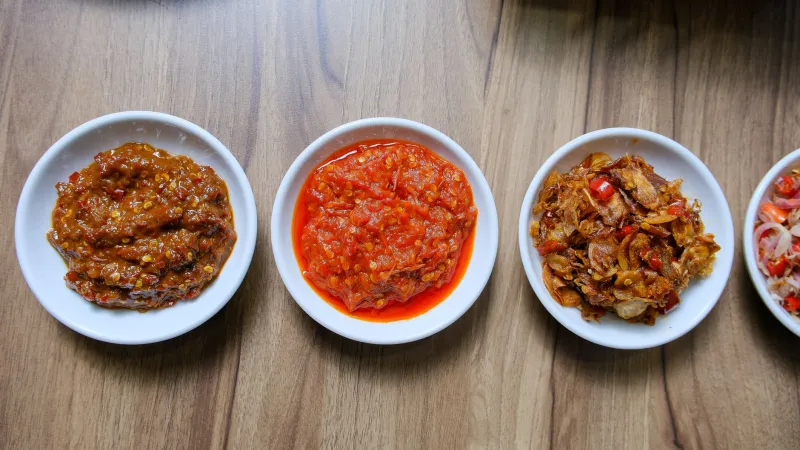
Let's be honest for a second. You've cooked an Indonesian green dish from a recipe you found online, maybe kangkung belacan or sayur lodeh, and it came out... fine. Not bad. But not like the version you had at that Indonesian restaurant in the city, or the meal a friend's family cooked for you, or that food stall you remember from a trip years ago.
You followed every step. You used the right greens. You even tracked down some of the harder-to-find ingredients. And yet the dish tasted flat — like a photocopy of something that should have been vivid and loud and layered.
Here's what I want to tell you: it's almost certainly not your fault, and it's probably not even a technique problem. What's missing is most likely terasi — fermented shrimp paste — and the reason it's missing is that almost every English-language adaptation of Indonesian recipes quietly leaves it out, buries it in a footnote, or suggests you skip it entirely.
That's a significant problem, and it's worth talking about.
What Terasi Actually Does
Terasi (also spelled trassi, and related to the Malaysian belacan) is a dense, pungent block of fermented shrimp paste that's been a cornerstone of Indonesian cooking for centuries. It smells intensely funky when raw — somewhere between the ocean, a fish market, and something you'd find in the back of a very old refrigerator. That smell is, understandably, the reason a lot of recipe writers tell Western readers to use it "optionally" or swap it out for something milder.
But here's the thing: when terasi hits heat, something remarkable happens. The sharp, aggressive fermented notes mellow and deepen into something savory and almost smoky. It doesn't make your food taste fishy. It makes your food taste complete. Food scientists would call this an umami amplifier. Indonesian home cooks would probably just call it "the part that makes it taste right."
Without it, Indonesian green dishes — especially those built around leafy vegetables, coconut milk, or sambal — often taste underdeveloped. The brightness is there, the aromatics are there, but there's no anchor. No depth. The flavor sits on top of the food rather than running through it.
Why American Recipes Keep Leaving It Out
This isn't a conspiracy. Recipe writers adapting Indonesian food for Western audiences are generally trying to be helpful. Terasi is genuinely hard to find in a lot of US cities (though that's changing). It smells alarming when you first open the package. And there's a real concern that telling someone "your kitchen is going to smell like a dockside fish processing facility for a few minutes" will just make them close the browser tab.
The result, though, is a slow erosion of the thing that makes Indonesian cooking Indonesian. When you strip out the ingredient that provides foundational umami, you end up with dishes that are pleasant but not particularly distinctive — green vegetables in coconut milk that could be from anywhere, rather than from a specific culinary tradition with its own logic and history.
This is a pattern that happens to a lot of cuisines when they travel. The sharp edges get filed down. The unfamiliar smells get swapped for familiar ones. And gradually, the cuisine becomes a softer, less interesting version of itself.
The Cultural Context Behind the Funk
In Indonesia, terasi isn't exotic or intimidating. It's a pantry staple — the kind of ingredient that grandmothers keep in a sealed container in the kitchen and reach for without thinking. It shows up in sambal, in spice pastes, in vegetable stir-fries, in soups. Different regions have their own preferred styles: some terasi is darker and more pungent, some is lighter and brinier.
The fermentation process itself is a form of preservation technology that developed in coastal communities where shrimp were abundant but refrigeration wasn't. Fermented shrimp paste stores for months, travels well, and packs an enormous amount of flavor into a very small amount of product. From a practical standpoint, it's one of the most efficient flavor tools ever developed.
Understanding that context makes it easier to approach terasi with curiosity rather than hesitation. It's not a weird or extreme ingredient — it's a smart one, developed by people who understood flavor deeply and needed their food to work hard.
How to Actually Use It (Without Panicking)
If you've never cooked with terasi before, start small. A piece about the size of a grape is enough for most dishes serving four people. The most common preparation is to toast it briefly — either wrapped in foil in a dry pan, or directly on a gas flame for a few seconds — before adding it to your spice paste or sambal. Toasting mellows the raw edge and makes it easier to incorporate.
Yes, your kitchen will smell funky for a few minutes. Open a window. It passes quickly, and what you're left with is a depth of flavor that no amount of fish sauce, soy sauce, or MSG can fully replicate (though those are all useful tools in their own right).
Where to find it in the US: Most Asian grocery stores carry terasi, often labeled as shrimp paste or belacan. Online retailers like Amazon stock several brands. Look for a firm, dark block rather than the soft paste variety — the block form is more traditional and generally more flavorful for Indonesian applications.
What If You Really Can't Find It?
Okay, sometimes you genuinely can't get to an Asian grocery store and the shipping timeline doesn't work. Here's an honest substitution hierarchy:
- Miso paste + a small amount of fish sauce — This combination gets you closer to the umami depth than fish sauce alone. Use white or yellow miso, not red, which can be too strong.
- Anchovy paste — Not traditional, but it provides fermented-fish umami in a pinch. Use about half the amount you'd use of terasi.
- Fish sauce alone — Better than nothing, but it adds liquid to your spice paste and the flavor profile is different. Increase your other aromatics to compensate.
None of these will make your dish taste exactly like the version made with terasi. But they're better than leaving the umami anchor out entirely, which is what most substitution guides recommend when they just say "skip it."
One More Thing Worth Saying
Indonesian green cooking is built on a philosophy of layered flavor — aromatics, heat, acid, fat, and that deep fermented base all working together. When you remove one of those layers because it seems unfamiliar or inconvenient, you're not simplifying the dish. You're changing it into something else.
That's not a moral judgment. Cooking evolves, and adaptation is part of how cuisines spread and survive. But if you've been making Indonesian green dishes and wondering why they don't quite land, it's worth trying the real thing at least once before deciding the adapted version is good enough.
Track down some terasi. Toast a small piece. Drop it into your sambal paste and see what happens.
I'd be genuinely surprised if you didn't taste the difference immediately.