Why Indonesian Cooks Have Been Hiding Their Best Flavor Secret in Plain Sight
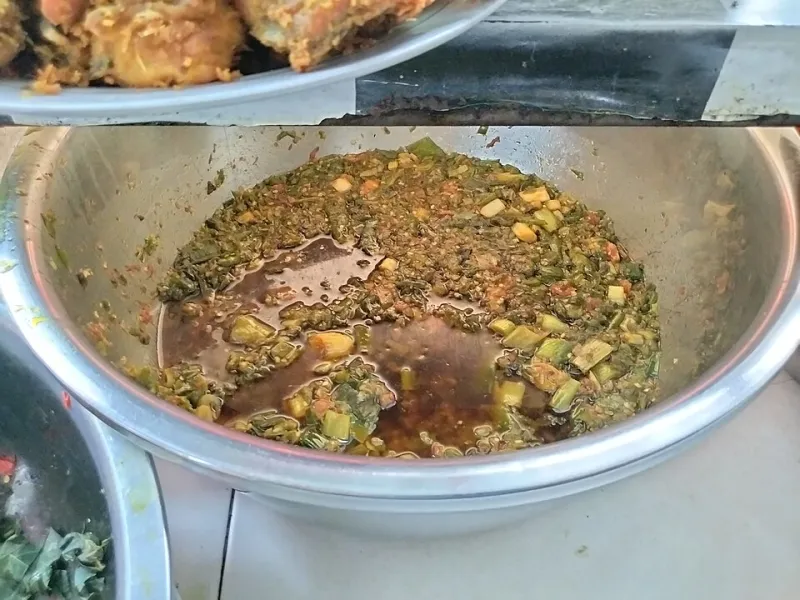
Photo: Abdul Hanif Arromy, CC BY 4.0, via Wikimedia Commons
Let me tell you about my tante's kitchen in Surabaya.
Every morning, before the rice was even cooked, she was at the stone mortar. A fistful of fresh green leaves — sometimes daun jeruk (kaffir lime leaves), sometimes kemangi, sometimes whatever was growing closest to the back door — would go in first, followed by chilies, garlic, and a little salt. The sound of grinding was the alarm clock of that house. By the time anyone sat down to eat, the air was already thick with something green and alive and completely impossible to replicate from a jar.
I've been thinking about that kitchen a lot lately, because I keep seeing the same conversation repeat itself in American food spaces: people are finally getting curious about Indonesian food, but they're approaching it from the outside in — starting with rendang, moving to nasi goreng, maybe attempting a gado-gado. All wonderful. But they're missing the layer underneath everything. The green layer.
The Green Foundation Nobody Talks About
Indonesian cuisine gets described in terms of its bold spices, its rich coconut curries, its fermented shrimp paste. And those things are real and important. But ask any Indonesian home cook what actually makes the food taste like home, and eventually the conversation comes back to fresh leaves.
Not dried herbs. Not powdered seasonings. Fresh, living, often-bruised green leaves used in quantities that would surprise most American cooks.
Kaffir lime leaves shredded so finely they almost dissolve into a dish. Lemongrass-adjacent daun salam (Indonesian bay leaves) that don't taste remotely like the dried Mediterranean version. Bundles of kemangi scattered over grilled fish like confetti. And then there's the category that really raises eyebrows among people unfamiliar with Indonesian cooking: leafy herb pastes, sometimes called bumbu hijau, where fresh green ingredients are ground into a wet paste that becomes the aromatic backbone of an entire meal.
Chef Rizky Hartanto, who runs an Indonesian pop-up dinner series in the Bay Area, puts it simply: "When I explain bumbu hijau to American guests, I usually compare it to a French herb butter or a chimichurri — something that takes fresh green aromatics and concentrates them into a flavor delivery system. But honestly, it's more aggressive than either of those. It's louder."
Louder. That's exactly the right word.
The Sambal Hijau Situation
If you've ever ordered padang food — that wildly flavorful West Sumatran style of Indonesian cooking you'll find at Minang restaurants in cities like Los Angeles, Houston, and New York — you've probably encountered sambal hijau without fully registering what you were eating.
Unlike the red sambal most Americans associate with Indonesian food, sambal hijau is made from green chilies, tomatoes, and a combination of aromatics that varies by family and region. It's bright, funky, a little oily, and has a freshness that cuts right through rich dishes. It's also, depending on who's making it, one of the most polarizing things on the table.
"My American friends either love it immediately or they look at me like I've served them something from another planet," laughs Dewi Santoso, a home cook and food community organizer based in the Seattle area who hosts monthly Indonesian cooking workshops. "It doesn't look like what people expect sambal to look like. It doesn't taste like what they expect sambal to taste like. And that's exactly why I always start there."
The controversy, she explains, isn't really about flavor — it's about expectation. American eaters have been trained to associate "sambal" with a specific red, sweet-spicy condiment profile. Sambal hijau breaks all of those rules at once, and some people need a minute to recalibrate.
But here's the thing: once they do, they almost always come back for more.
Why This Matters for US Home Cooks
There's a practical argument and a cultural one, and both are worth making.
The practical argument: fresh green herb pastes and leafy aromatics are genuinely easy to work with once you understand the logic. Most of the key ingredients — lemongrass, kaffir lime leaves, green chilies, fresh turmeric — are available at Asian grocery stores in most mid-to-large US cities, and increasingly at well-stocked farmers markets. A basic stone mortar (or a small food processor in a pinch) is all the equipment you need. The technique isn't complicated. You're essentially making a wet spice paste and either cooking it in oil until fragrant or using it raw as a finishing element.
The payoff is enormous. A simple piece of grilled chicken becomes something else entirely when you marinate it in a green paste of kemangi, garlic, green chili, and a little coconut oil. A bowl of plain rice noodles transforms when you stir in a spoonful of fresh herb paste right at the end of cooking. These aren't exotic techniques requiring culinary school training — they're home cooking moves that Indonesian grandmothers have been executing for generations.
The cultural argument is maybe more important: for the Indonesian diaspora in the US, these flavors are connective tissue. They link a kitchen in suburban New Jersey to one in Bandung. They make a meal feel like a message from home.
"I grew up eating my mom's ikan bakar with sambal hijau every Sunday," says Hartanto. "When I make it now in San Francisco, it's not just dinner. It's a whole conversation across time and distance. The green paste is the part that carries all of that."
A Simple Starting Point: Green Herb Rice
If you want to experiment without committing to a full recipe overhaul, start here. This is the kind of thing Indonesian home cooks do almost without thinking — a quick application of the green-leaf philosophy.
Take a small handful of fresh kemangi or lemon basil, a stalk of lemongrass (white part only), two green chilies (seeds removed if you want less heat), and two cloves of garlic. Pound or blend them into a rough paste with a pinch of salt and a drizzle of neutral oil. Heat a pan, cook the paste for two minutes until fragrant, then toss in two cups of day-old rice. Stir-fry for three to four minutes. Finish with a squeeze of lime.
That's it. That's the whole move. And if you've never cooked with fresh herb pastes before, this will be a genuine revelation — the kind of simple thing that makes you wonder why you weren't doing it all along.
The Green Leaf Philosophy
At Hijau Daun Kitchen, the name isn't just branding. It's a whole way of thinking about food — that the green things, the leafy things, the fragrant and sometimes overlooked things are where so much of the real flavor lives.
Indonesian cooking has known this forever. The rest of the world is just starting to catch up. And honestly? The best place to start catching up is with a mortar, a handful of fresh leaves, and a willingness to let something a little unexpected into your kitchen.
Your tante would be proud.
