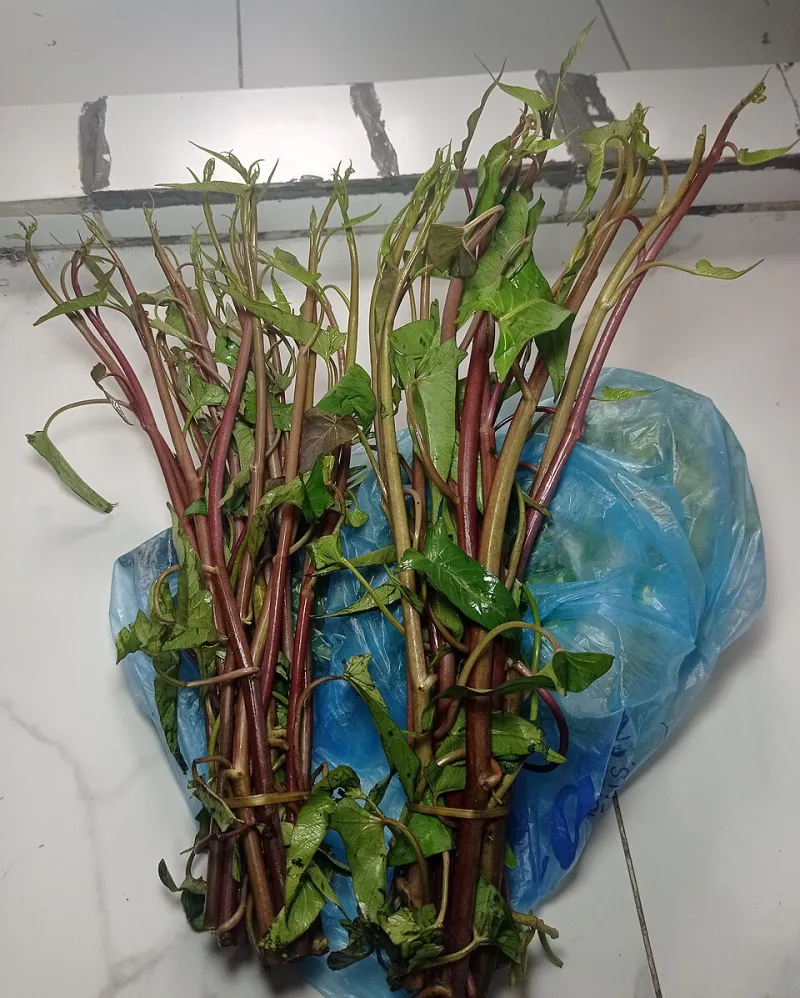
The Soil Secret Behind Restaurant-Quality Indonesian Greens (And Why Your Garden Probably Doesn't Have It Yet)
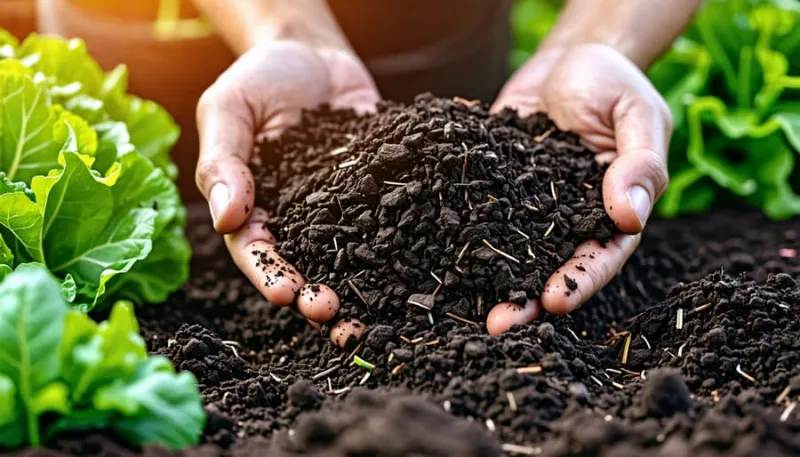
Photo: hands adding compost and soil amendments to raised garden bed with green leafy vegetables, via clearpond.com.au
There's a particular moment that every home gardener who's also a food lover eventually experiences. You've grown something from seed, tended it carefully, harvested it at the right time, cooked it with a recipe you trust — and it's good. It's genuinely good. But it's not that. It doesn't have whatever that thing is that makes the same dish at a great Indonesian restaurant taste like it came from a completely different plant.
Most people assume the gap is the recipe. Maybe there's a missing ingredient, a technique they haven't figured out, some secret spice paste they haven't sourced yet.
But here at Hijau Daun Kitchen, we've been paying attention to this question for a while. And more often than not, the answer isn't in the recipe at all.
It's in the dirt.
Why Soil Chemistry Is Actually a Flavor Conversation
Flavor in leafy greens isn't just about genetics — it's about what the plant can access while it's growing. Mineral content in leaves directly affects the compounds that register as taste and aroma. Greens grown in mineral-rich, biologically active soil produce more complex chlorophyll compounds, more volatile aromatic molecules, and a broader range of organic acids than the same plant grown in depleted or chemically simplified soil.
This is why Indonesian greens grown in traditional volcanic soil — which is extraordinarily mineral-dense — often have a depth and intensity that's hard to replicate elsewhere. It's the same reason a tomato from a farmers market in August tastes completely different from one shipped from a distribution center in February. The soil history is embedded in the flavor.
American grocery store greens, including many of the Indonesian varieties now available in Asian supermarkets, are typically grown in large-scale commercial operations optimized for yield and shelf life — not flavor complexity. They're not bad. They're just... flat. And once you understand why, you can start doing something about it in your own backyard.
The pH Foundation: Getting This Wrong Blocks Everything Else
Before we talk about what to add, let's talk about what makes amendments actually work: pH.
Most Indonesian leafy greens — bayam (amaranth), kangkung (water spinach), daun kemangi (lemon basil), and katuk — prefer a slightly acidic to neutral soil pH, generally somewhere between 6.0 and 7.0. In this range, critical micronutrients like iron, manganese, zinc, and copper are most bioavailable to plant roots. Outside this range — even slightly — those nutrients become chemically locked in the soil and plants can't access them no matter how much you've added.
The first thing to do before any amendment program is a soil test. Your local cooperative extension office can run one for a small fee, or you can buy a home kit at any garden center. If you're in the eastern US, your soil may trend acidic and need lime to bring it up. If you're in the arid West, alkalinity is more common and sulfur or acidifying compost can help bring pH down.
This step alone can explain why two gardeners growing the same variety get completely different flavor results.
Trace Minerals: The Underrated Flavor Drivers
Once pH is dialed in, the next layer is trace mineral availability. This is where traditional Indonesian gardening practices offer some genuinely interesting lessons.
In many parts of Indonesia — particularly Java and Sumatra — volcanic soil naturally contains elevated levels of minerals like silica, calcium, magnesium, and a range of micronutrients that most American soils have been slowly depleted of through decades of conventional farming and development. These minerals don't just support plant health — they directly influence the synthesis of flavor compounds.
Magnesium is central to chlorophyll production. More available magnesium means richer, deeper green color and more intense leafy flavor. If your greens look a little pale or taste bland, magnesium deficiency is a common culprit. A top dressing of dolomitic limestone or a foliar spray of diluted Epsom salt (magnesium sulfate) can help — but only if your pH is right first.
Silica is one that most American gardeners have never thought about. It strengthens cell walls, which actually intensifies flavor concentration in leaves by slowing moisture loss. Diatomaceous earth worked into the soil surface or rice hull ash — something used widely in Indonesian traditional agriculture — are both excellent silica sources. Rice hull ash is worth tracking down if you can find it; it adds potassium and silica simultaneously.
Zinc and manganese play roles in enzyme activity that affects how plants synthesize aromatic compounds. Deficiencies in these minerals often result in greens that smell and taste muted. A broad-spectrum trace mineral supplement, or better yet, a high-quality kelp meal, addresses these gaps naturally.
The Composting Difference: What You Put In Determines What Comes Out
Not all compost is equal. This is a point that gets glossed over constantly in general gardening advice, but it matters enormously for flavor-focused growing.
Basic municipal compost or bagged compost from a big-box store is better than nothing — but it's often made from a limited range of feedstocks and may have a fairly narrow mineral profile. Indonesian traditional home composting, by contrast, tends to incorporate an extremely diverse mix of organic material: kitchen scraps including fish waste, coconut husks, banana leaves, wood ash, and green garden material. That diversity translates to a more complex mineral and microbial profile in the finished compost.
If you want to move toward this kind of richness in your own compost, a few practical steps help:
- Add wood ash in small amounts. It contributes potassium and raises pH slightly — good if you're working with acidic soil.
- Include seaweed or kelp if you can source it. Dried kelp from garden suppliers is an easy way to introduce a wide spectrum of trace minerals.
- Use diverse green material rather than just one or two types. Grass clippings, vegetable scraps, herb stems, even coffee grounds all add different nutrient profiles.
- Let it finish fully. Partially broken-down compost can actually tie up nitrogen and create imbalances. Finished compost — dark, crumbly, smelling like forest floor — is what you want.
Biological Activity: The Living Layer You Can't See
One more dimension that traditional Indonesian gardens have in abundance: microbial life. Healthy soil is teeming with bacteria, fungi, and other organisms that form symbiotic relationships with plant roots, helping them access nutrients more efficiently. This biological layer is often severely depleted in soil that's been treated with synthetic fertilizers or pesticides.
Inoculating your soil with mycorrhizal fungi at planting time — widely available as a powder or granule at garden centers — can make a measurable difference in nutrient uptake and, consequently, in flavor. Compost teas, made by steeping finished compost in aerated water, are another way to introduce beneficial microbes directly to your soil.
Avoid tilling deeply and repeatedly. Every time you turn soil aggressively, you disrupt the fungal networks that take months to establish. Minimal-disturbance or no-till approaches, common in traditional Indonesian kitchen gardens, preserve these networks and let them do their quiet, flavorful work.
Putting It Together Before Your Next Season
You don't need to overhaul everything at once. Start with a soil test, adjust pH if needed, add a quality diverse compost, and work in some kelp meal and rice hull ash if you can find it. That combination alone will put you ahead of most backyard gardens — and noticeably closer to that restaurant-quality depth you've been chasing.
The gap between your garden greens and the ones that make you close your eyes at a great Indonesian restaurant is real. But it's not mysterious. It's mineral. And now you know where to start.