Two Leaves Are Better Than One: The Indonesian Flavor Pairing Secret American Kitchens Are Sleeping On
Most American home cooks reach for one herb and call it a day. A sprig of cilantro here, a handful of basil there. It works — but it doesn't sing. Indonesian kitchens have known for generations that the real magic happens when leaves work in pairs, or even trios, each one filling in the gaps the others leave behind.
This isn't about piling on flavor. It's about chemistry, balance, and the kind of depth that makes you go back for a third spoonful without knowing exactly why.
Why Single-Herb Cooking Hits a Ceiling
Here's the thing about relying on one herb: you're essentially playing one note. Cilantro is bright and citrusy. Thai basil is sweet and a little anise-forward. Lemongrass is sharp and grassy. Each of these is genuinely wonderful on its own. But when you cook with only one, you're working in a narrow flavor band.
Traditional Indonesian cooking — particularly in regions like Java, Sumatra, and Sulawesi — never approached it that way. The bumbu (spice and herb paste) tradition is built on layering, and that principle extends to fresh leaves just as much as it does to dried spices. Cooks aren't just adding flavor; they're constructing it, the way an architect layers materials to create something structurally sound.
The result? Dishes that taste more complex than their ingredient lists suggest. Dishes that don't need a salt shaker on the table because the flavor is already complete.
The Science of Why These Pairings Work
Leaves contain volatile aromatic compounds — things like linalool, citral, estragole, and various terpenes — and these compounds interact when combined. Some amplify each other. Some fill in aromatic gaps. Some create entirely new perceived flavors that neither herb contains on its own.
Lemongrass, for example, is high in citral, which gives it that sharp, lemony brightness. Vietnamese coriander (also called daun kesum or laksa leaf) carries a completely different aromatic profile — more peppery, slightly floral, with a faint metallic edge that adds intrigue. When you put them together in a dish, the citral from the lemongrass seems to open up the more subtle notes in the Vietnamese coriander. You get brightness and depth at the same time.
Add Thai basil into that mix, and now you've introduced estragole — the compound responsible for that sweet, slightly licorice-like quality — which rounds out the sharper edges of both other herbs. The trio doesn't taste like lemongrass plus Vietnamese coriander plus Thai basil. It tastes like something entirely its own.
This is what Indonesian cooks mean when they talk about a dish being pas — just right. Not too sharp, not too flat, not too sweet. Balanced in a way that feels almost inevitable.
Three Pairings Worth Starting With
Lemongrass + Vietnamese Coriander + Thai Basil This is the classic aromatic trio you'll find running through Sumatran-influenced dishes and many laksa-style preparations. Lemongrass goes in early — bruised and simmered — to build a citrusy backbone. Vietnamese coriander gets added toward the end of cooking to preserve its peppery complexity. Thai basil goes in last, or even fresh on top, so the estragole compounds don't cook off entirely.
Try it in: A simple coconut broth with tofu and rice noodles. Sweat shallots and garlic in oil, add bruised lemongrass and simmer with coconut milk and a splash of fish sauce (or soy sauce for a vegetarian version). Pull out the lemongrass, add cooked noodles, then finish with torn Vietnamese coriander and a generous handful of Thai basil. It'll taste like it took hours.
Kaffir Lime Leaf + Turmeric Leaf These two don't get paired often in Western cooking, but in Indonesian kitchens they're a natural team. Kaffir lime leaf (daun jeruk purut) is all citrus oils and floral brightness. Turmeric leaf (daun kunyit) is earthier, slightly bitter, with a warm undertone that grounds the whole dish. Together, they create a flavor that reads as both fresh and deep simultaneously.
Try it in: A dry-cooked chicken dish. Pound shallots, garlic, galangal, and fresh turmeric into a rough paste, cook it down in oil until fragrant, then add chicken pieces and a few kaffir lime leaves torn in half. Add a turmeric leaf tied in a loose knot so it releases slowly. Simmer until the liquid is almost gone and the chicken is coated. The turmeric leaf pulls the whole thing together in a way you won't be able to explain — but you'll notice if it's missing.
Pandan + Lemon Basil This pairing is less common in savory cooking but absolutely worth knowing. Pandan (daun pandan) has a vanilla-adjacent, grassy sweetness. Lemon basil (kemangi) is bright and citrusy with a slightly herbal edge. In rice dishes and light broths, they create a fragrant, almost floral quality that feels simultaneously familiar and exotic to American palates.
Try it in: Steamed jasmine rice cooked with a tied pandan leaf and finished with fresh lemon basil torn over the top. It's a side dish that will quietly steal the show.
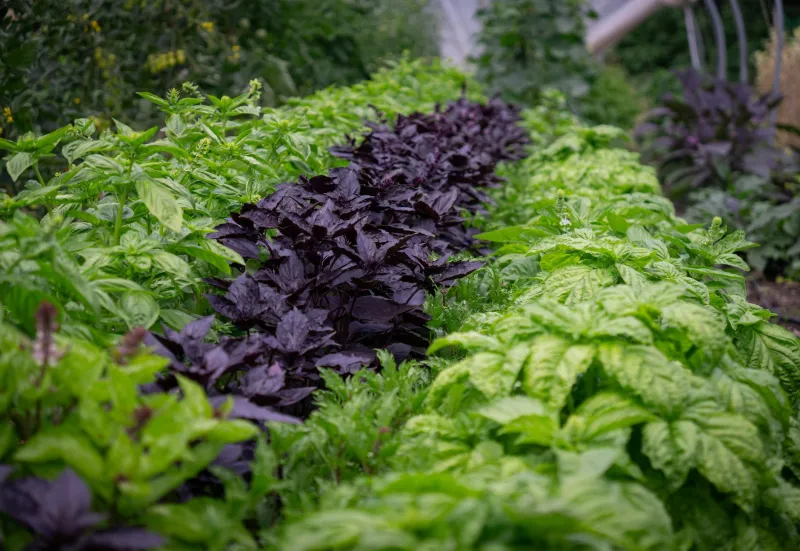
Growing These Combinations in One Bed
The good news: most of these plants are genuinely compatible in the same garden space, and several of them will thrive across a wide range of US growing zones.
Lemongrass is a heavy feeder that likes full sun and warmth. In zones 9–11, it's a perennial. Everywhere else, grow it in a large container you can bring indoors before the first frost. It gets big — give it at least a 12-inch pot or a dedicated corner of a raised bed.
Vietnamese coriander loves heat and moisture. It spreads enthusiastically (some would say aggressively), so a container or a contained bed section is smart. It's a great companion to lemongrass because they share similar water needs.
Thai basil is easy to find as starts at most nurseries now, and it's a well-behaved annual. Plant it near lemongrass for a natural companion setup — the lemongrass acts as a mild pest deterrent.
Kaffir lime can be grown as a potted tree in most of the US. It's slow, but incredibly rewarding once established. Keep it in a sunny spot and bring it in during winter.
Turmeric grows beautifully as a container plant or in a warm garden bed. It dies back in winter but returns reliably from rhizomes. Harvest the leaves before the plant goes dormant.
Pandan and lemon basil both do well in containers. Pandan needs consistent warmth and moisture; lemon basil is an annual that reseeds freely if you let a few plants go to flower.
The key to making this work as a combined bed: group plants with similar water needs, give lemongrass its space, and keep the spreading plants (Vietnamese coriander especially) in check with physical barriers or containers within the bed.
Stop Reaching for the Salt Shaker
Here's the honest truth: a lot of what we reach for salt to do — add depth, round out sharpness, make a dish feel complete — can be accomplished by building your flavor base with the right leaf combinations. That doesn't mean you never use salt. It means you need less of it, because the herbs are already doing the heavy lifting.
Indonesian cooking figured this out a long time ago. The dapur (kitchen) was always also a garden, and the garden was always also a pantry. Leaves weren't garnishes. They were infrastructure.
Grow a few of these combinations this season, cook with them together, and see what happens. You might find yourself wondering why you ever settled for one herb at a time.