Your Farmers' Market Haul Might Already Have Indonesian Soul — Here's How to Tell
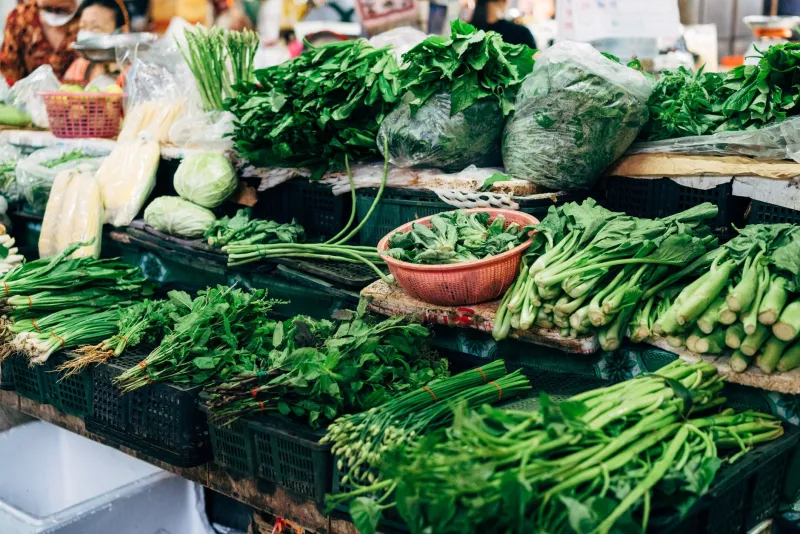
Here's something that doesn't get said enough in the world of Indonesian cooking: you probably already own ingredients that belong in a traditional Indonesian dish. Not knockoffs. Not sad approximations. Actual flavor cousins that Indonesian home cooks would recognize and, in some cases, respect.
But here's the other side of that truth — some greens that look like they should work will completely throw off a dish. The bitterness lands wrong. The texture collapses. The whole thing tastes like a recipe that's missing something, and you can't quite figure out what.
We've spent a lot of time in this kitchen thinking about the gap between what's available at a typical US farmers' market and what grows in Indonesian home gardens. And the answer isn't always "just order it online." Sometimes the answer is already in your shopping bag — you just need to know what you're actually holding.
The Ones That Actually Work
Mustard greens → Sawi Pahit or Sawi Hijau
This is probably the strongest true match in the American produce world. Mustard greens — especially the younger, less fibrous leaves you find at farmers' markets in spring and fall — carry that sharp, slightly bitter edge that Indonesian cooks love in sawi pahit (bitter mustard greens). When you're making tumis sawi (stir-fried mustard greens with garlic and chili), a good bunch of American mustard greens will get you 85% of the way there without any apology.
The caveat: mature mustard greens from a grocery store can be aggressive. They're not wrong, just louder. If you're using them in a subtler broth-based dish, blanch them briefly first. That tones down the sharpness without killing the character.
Arugula → Selada Air (in small doses)
This one surprises people. Arugula's peppery, slightly grassy bite actually echoes the flavor profile of certain Indonesian water greens, particularly when they're young and freshly picked. It's not a one-to-one swap — arugula wilts faster and doesn't have the same structural integrity — but in cold preparations, fresh salads dressed with kecap manis and a little lime, arugula behaves like it was invited to the party.
Don't cook it the way you'd cook kangkung (water spinach). It'll turn into sad green mush. Use it raw or barely wilted, and it earns its place.
Dandelion greens → Daun Pepaya (young)
Young dandelion greens from a farmers' market — not the ones from your lawn, please — share a genuine kinship with young papaya leaves. Both are bitter in a clean, herbal way rather than a harsh or tannic way. Indonesian cooks use young papaya leaves in soups and stir-fries, often with coconut milk to balance the bitterness. Dandelion greens respond to the exact same treatment. If you've never made a coconut milk-braised bitter green dish with dandelion, that's a Saturday afternoon well spent.
Watercress → Kangkung
Watercress is probably the most widely known substitute for kangkung, and it holds up. Both are aquatic plants. Both have a mild, clean flavor with a slight pepperiness. Both wilt quickly in a hot pan and taste best when they're not overcooked. For tumis kangkung — the classic Indonesian stir-fry with fermented shrimp paste, garlic, and chili — watercress is a genuinely solid stand-in. It's not identical, but it's close enough that the dish still makes sense.
The Ones That Are Decent in a Pinch (But Know Their Limits)
Spinach → Bayam
Indonesian bayam is a different plant from Western spinach, but they're close enough relatives that spinach works in a supporting role. The problem is texture. Bayam holds up better in soups and stews. Spinach, especially the baby variety, turns silky and almost disappears when it hits heat. That's not always bad — it just means you need to adjust your expectations. Use spinach in lighter broths and avoid it in dishes where the green is supposed to be a structural element.
Butter lettuce → Selada
Butter lettuce can approximate the mild, slightly sweet flavor of Indonesian selada in fresh preparations. It's fine in gado-gado if you're in a pinch. But it's also completely forgettable. It brings almost nothing to a dish beyond texture, and even that's fragile. Use it when you need something to carry a sauce, not when you need the green itself to contribute flavor.
The Ones That Will Let You Down
Kale → Anything Indonesian
We know. Kale is everywhere. It's nutritious, it's sturdy, and it's at every farmers' market from May through November. But kale does not belong in Indonesian cooking, and no amount of massaging or marinating is going to change that. Its bitterness is fibrous and heavy in a way that fights against coconut milk, fermented shrimp paste, and the aromatic base of most Indonesian dishes. It doesn't absorb flavor the way Indonesian greens do — it just sits there, tasting like kale. Save it for your Caesar salad.
Swiss chard → Daun Singkong (cassava leaves)
Cassava leaves have a particular earthiness and slight chewiness that Swiss chard simply doesn't replicate. Chard is mild and sweet where cassava leaves are complex and slightly astringent. In a dish like buntil (cassava leaves stuffed with spiced coconut) or sayur daun singkong, Swiss chard produces something that tastes vaguely Indonesian but ultimately confused. If you genuinely can't find cassava leaves, look for them frozen at an Asian grocery store — that's a better solution than chard.
Why This Actually Matters
Knowing the difference between a genuine flavor bridge and a polite compromise isn't just culinary trivia. It changes how you cook. When you know that mustard greens are a real stand-in for sawi, you cook with confidence. You don't second-guess the dish. When you know that kale is a dead end, you stop wasting time trying to make it work and start looking for better options.
Indonesian cooking has always been adaptive. The cuisine evolved through centuries of trade, migration, and improvisation. Indonesian home cooks didn't always have access to every ingredient — they made smart substitutions based on understanding flavor rather than just following a list. That's the spirit we're cooking with here at Hijau Daun Kitchen.
Your farmers' market is more Indonesian-friendly than you think. You just need to know what you're looking at.
One Last Thing
Next time you're walking through the market, stop at the greens stall and actually taste before you buy. Ask the farmer how old the mustard greens are, whether the watercress came in fresh this week, what the dandelion greens have been growing near. The more you understand what you're holding, the better your Indonesian cooking gets — no specialty store required.