What Supermarket Herb Bundles Aren't Telling You — And Why Indonesian Kitchens Never Had This Problem
You've done it. We've all done it. You grab a bundle of cilantro or a clamshell of basil at the grocery store, full of good intentions for the week ahead. By Wednesday, half of it is yellow. By Friday, it's a wet, dark puddle at the bottom of your crisper drawer. You blame yourself — maybe you forgot to trim the stems, maybe you stored it wrong — but here's the thing: it probably wasn't your fault at all.
The herbs you're buying at most American supermarkets were never really "fresh" to begin with. Not in the way that word should mean.
The Long Road Between Farm and Shelf
Most commercially grown herbs in the US — and a significant portion of what's imported — travel hundreds, sometimes thousands of miles before they reach a store shelf. Basil harvested in California might sit in a refrigerated truck for two or three days before it ever hits a grocery display. Cilantro grown in Mexico can spend a week in cold chain logistics before it lands in your cart.
The problem isn't just distance. It's what happens before the herbs even leave the farm.
Commercial herb operations harvest for yield and visual appeal, not peak flavor or longevity. Leaves are cut when they're large enough to look good in a bundle, not necessarily when they're at their most nutritious or aromatic. After cutting, they're rapidly chilled — which sounds good in theory, but basil, for instance, is genuinely cold-sensitive. Temperatures below 50°F cause cellular damage in basil leaves, which is exactly why your grocery store bunch turns black so fast. The refrigerated display case is actively hurting it.
Then there's the packaging. Plastic wrapping traps moisture and cuts off airflow, creating the ideal environment for bacterial growth. The herbs look pristine under those fluorescent lights. But the clock has already been ticking for days.
What "Fresh" Actually Means in an Indonesian Kitchen
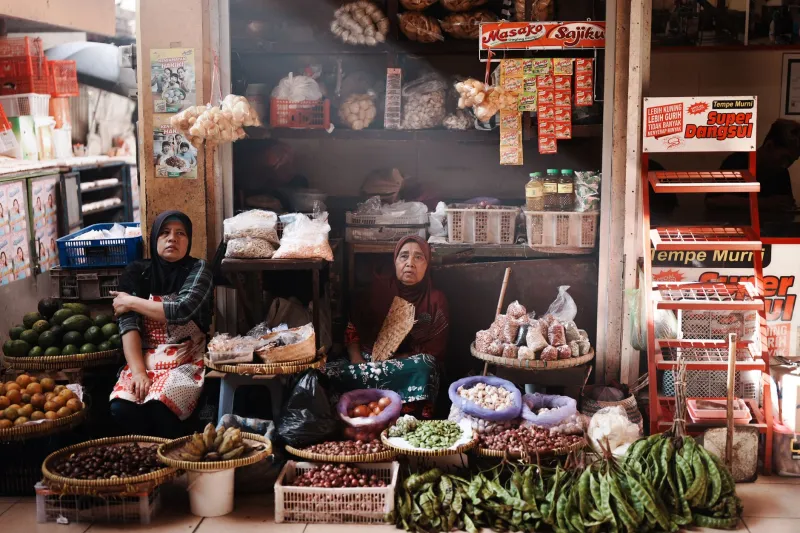
In Indonesia, the concept of "fresh herbs" isn't really a grocery store category — it's a time-of-day reality. In most traditional households and warung kitchens, herbs are either grown right outside or purchased that morning from a pasar (open-air market) where vendors bring in small quantities daily. There's no cold chain. There's no plastic clamshell. There's a woman who grew this kemangi in her yard and cut it two hours ago.
That immediacy changes everything. Herbs harvested at the right stage — typically in the early morning, when essential oil concentrations are highest and the plant is still hydrated from the night — carry a completely different aromatic intensity than anything that's been sitting in a distribution warehouse.
Kemangi, the fragrant lemon basil used throughout Indonesian cooking, is a perfect example. It wilts within hours of cutting if you don't know how to handle it. But Indonesian cooks do know how to handle it, and that knowledge has nothing to do with a fancy herb keeper from a kitchen gadget store.
The Harvest Timing Secret
One of the most overlooked factors in herb quality is when the plant was cut relative to its growth stage. In Indonesian home gardening tradition, there's a nuanced understanding of this that most American gardeners — and certainly commercial herb farms — don't apply.
Young, small leaves on a kemangi or daun pandan plant carry more concentrated flavor than the large, mature leaves that look impressive in a bundle. Older leaves have often passed their aromatic peak. They look lush, but the volatile compounds that give herbs their punch have started to diminish.
For herbs like daun salam (Indonesian bay leaf) or daun jeruk (kaffir lime leaf), the opposite is partly true — slightly more mature leaves have had time to develop their full fragrance. Knowing which stage suits which herb is the kind of knowledge that gets passed down at the kitchen table, not printed on a seed packet.
How Indonesian Cooks Keep Herbs Going Longer
Here's where things get practical. You may not have a pasar down the street, but you can absolutely apply Indonesian herb-handling logic in your American kitchen.
Don't refrigerate basil. This goes against everything the grocery store implies by keeping it cold, but basil — including kemangi — stays alive far longer at room temperature. Trim the stems, put the bunch in a glass of water like you would flowers, and leave it on your counter away from direct sunlight. It'll last three to five days this way versus one or two in the fridge.
Store hardy herbs differently. Cilantro, flat-leaf parsley, and daun seledri (Indonesian celery leaf) actually do benefit from refrigeration — but wrapped loosely in a dry paper towel inside a container, not crammed into their original plastic. The paper towel absorbs excess moisture without drying the leaves out entirely.
Use the whole stem. Indonesian cooking rarely wastes the stem of an herb. Cilantro stems carry significant flavor and are chopped right in. Daun seledri stems go into soups and broths. This isn't just a zero-waste philosophy — it means you're getting more value from every bunch you buy, even an imperfect grocery store one.
Bruise before you use. For thick-leafed herbs like daun pandan or kaffir lime leaf, gently tearing or bruising the leaf before adding it to a dish releases aromatic compounds that would otherwise stay locked inside. Indonesian cooks do this instinctively. Most American recipes don't mention it.
The Grow-Your-Own Argument (It's Simpler Than You Think)
The most honest solution to the supermarket herb problem is the one Indonesian home cooks have always relied on: grow a little yourself.
You don't need a large garden. Kemangi thrives in a pot on a sunny windowsill. Daun seledri does well in containers. Even kaffir lime can be grown in a large pot in USDA zones 9 and above, or brought indoors in colder climates during winter. When you grow your own, you control the harvest timing. You cut what you need, when you need it. There's no cold chain, no plastic wrap, no three-day truck ride.
The flavor difference is immediate and obvious. Kemangi you cut from your own plant ten minutes before dinner has a citrusy brightness that no grocery store bundle can match. Once you've cooked with it, it's genuinely hard to go back.
Rethinking the Way You Shop for Herbs
If growing your own isn't an option right now, there are still smarter ways to shop. Farmers markets — especially those with Southeast Asian vendors — are often your best bet for herbs that were actually harvested recently. Asian grocery stores in most mid-size American cities frequently carry herbs with faster turnover than mainstream supermarkets, simply because their customer base demands quality and uses herbs in larger quantities.
When you're at any store, look at the stems. Fresh herbs have firm, green stems that haven't gone slimy or brown at the cut end. Smell through the packaging if you can — you should be able to detect fragrance even before opening. If a bunch of basil smells like nothing, it's already gone.
The American grocery store hasn't exactly been lying to you. But it has been quietly letting you believe that limp, flavorless herbs are just what herbs are like. Indonesian kitchens — from the smallest home garden in Java to the busiest warung in Sumatra — have always known better. Now you do too.