Why Your Indonesian Greens Keep Failing — And What Traditional Planting Density Gets Right
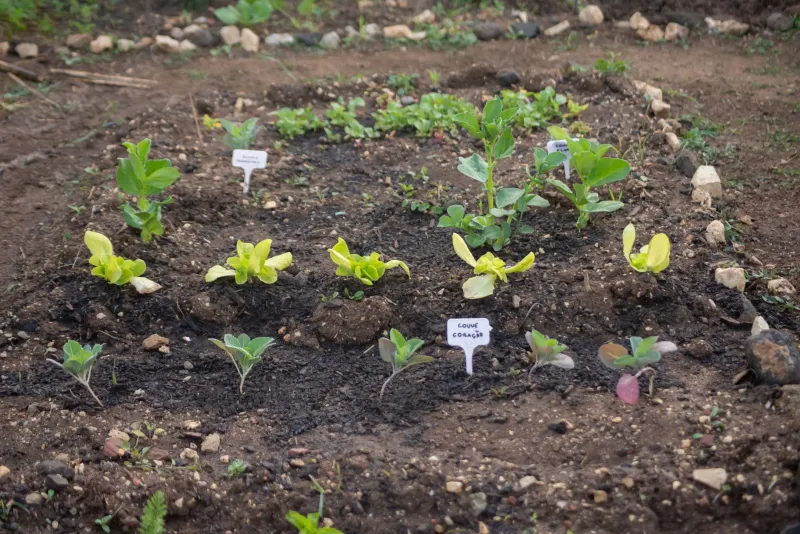
That Grid Pattern in Your Raised Bed Might Be Working Against You
If you've ever followed the spacing instructions on a seed packet, planted your kangkung or bayam in neat little rows, and then watched the whole thing turn into a yellow, leggy mess by midsummer — you're not alone. A lot of American backyard gardeners hit this wall. And the frustrating part? It's not the seeds. It's not even the soil, most of the time. It's the spacing philosophy.
Western vegetable gardening was largely developed around European crops — brassicas, root vegetables, sprawling squash — that need room to form large individual structures. Spacing guidelines that work beautifully for a head of cabbage or a row of carrots don't automatically translate to the kinds of leafy greens that Indonesian home gardens have been producing for generations. When you force that framework onto plants that evolved in a completely different agricultural tradition, you get plants that are technically alive but never quite thriving.
Here's what Indonesian farmers figured out long before raised bed gardening became a Pinterest trend: density, done correctly, is a feature — not a problem.
The Logic Behind Close Planting in Indonesian Agriculture
In Indonesia, small-scale farming has always had to do a lot with a little. Home gardens — called pekarangan — are typically compact, layered growing spaces where multiple plants share close quarters by design. This isn't accidental crowding. It's a deliberate system that mimics the layered structure of a tropical forest, where plants at different heights shade, support, and protect each other.
Leafy greens like kangkung (water spinach), bayam (Indonesian spinach), kemangi (lemon basil), and daun singkong (cassava leaves) are often grown in clusters rather than individual rows. Farmers use a method sometimes described as broadcast sowing within defined patches, then thin selectively as the plants mature — eating the thinnings as young greens rather than discarding them. Nothing is wasted. The remaining plants are already conditioned to grow in community, their roots having developed in mild competition, which actually encourages faster upward growth and denser leaf production.
The key principle here is that these plants aren't trying to form a single large structure. They're producing leaves — which means the goal is canopy coverage, not individual plant size. Closer planting creates that canopy faster, shades out weeds, retains soil moisture, and keeps the microclimate around the roots cooler and more consistent.
What the Numbers Actually Look Like
Let's get practical. Most American gardening guides suggest 6 to 12 inches between leafy green plants, depending on variety. For Indonesian greens, the traditional approach looks quite different:
Kangkung (water spinach): Traditionally broadcast-sown in patches and thinned to roughly 3–4 inches apart once seedlings are 4–5 inches tall. In a 2×4 foot raised bed section, you can maintain 20–24 plants easily, harvesting outer stems continuously while the center keeps producing.
Bayam (Indonesian spinach): Sow densely — almost scatter-style — across a prepared bed, then thin to 2–3 inch spacing at the seedling stage. The thinnings at 3–4 inches tall are excellent sautéed with garlic. Remaining plants fill in quickly and can be cut-and-come-again harvested every 10–14 days.
Kemangi (lemon basil): Slightly more spacing needed — around 6 inches — but Indonesian cooks often interplant it among taller greens, using it as a ground-level companion rather than a standalone crop. This reduces its exposure to direct afternoon sun and keeps the leaves from getting tough.
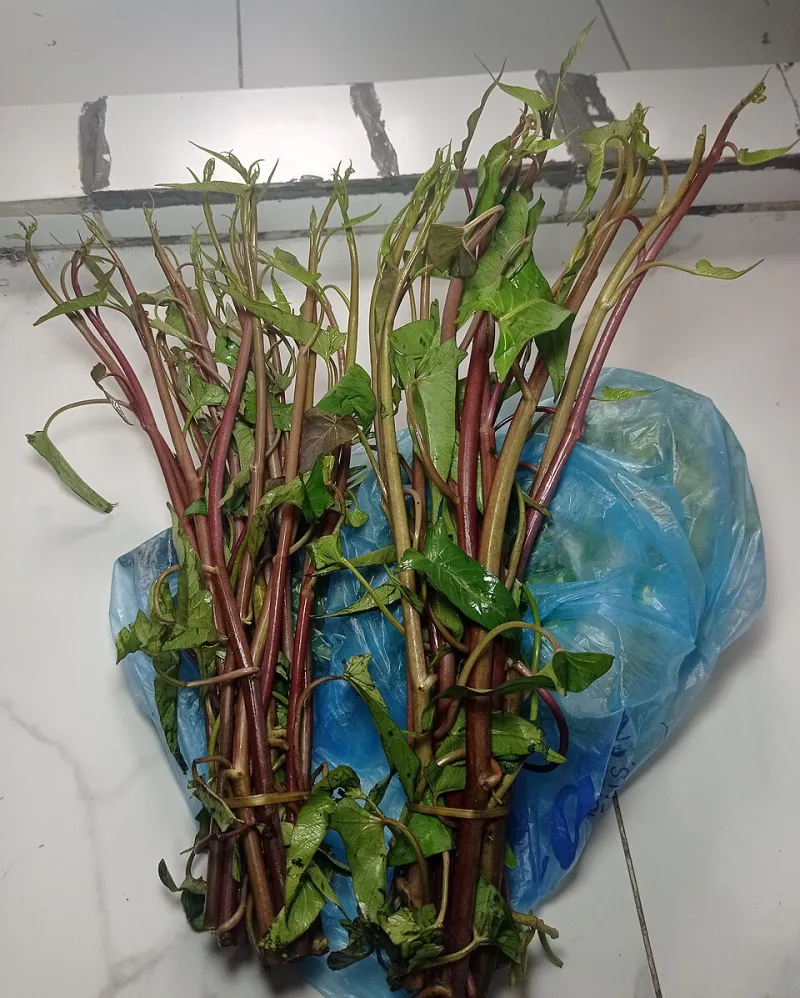
Daun singkong (cassava leaves): Cassava itself needs more room — 18–24 inches between plants — but the leaves can be harvested from the top growth continuously. In a US garden, growing cassava in large containers or in a dedicated corner of a raised bed and treating it as a leaf crop (rather than a root crop) is a practical workaround.
Transplanting Timelines for US Backyard Gardens
Timing matters as much as spacing, and this is another area where American gardening calendars can steer you wrong. Indonesian planting cycles are tied to wet and dry seasons, not the frost dates that dominate US gardening advice.
For most of the continental US, here's a workable framework:
- Start kangkung and bayam indoors 3–4 weeks before your last frost date. These germinate fast — often within 5–7 days — and transplant well at the 2-leaf stage. Move them outside when nighttime temps are consistently above 55°F.
- Direct sow in warm soil once you're past frost. Soil temp above 65°F is the real trigger for these tropical greens, not just air temperature. A cheap soil thermometer is worth every penny here.
- Succession plant every 3 weeks through midsummer. Because these greens mature quickly and benefit from cut-and-come-again harvesting, staggered plantings keep your kitchen stocked continuously rather than giving you one overwhelming harvest.
- In USDA zones 9–11, you can run a second planting cycle in early fall. Kangkung especially appreciates the cooler fall temperatures in Southern California, Florida, and the Gulf Coast — the leaves get more tender and flavorful.
The Microclimate Advantage Nobody Talks About
One underrated benefit of tighter planting density is what it does to the environment right at plant level. When Indonesian greens are grown at traditional spacing, their leaves quickly form a low canopy over the soil. That canopy does three things American gardeners often fight hard to achieve through mulching and irrigation alone: it shades the soil surface to reduce moisture evaporation, it keeps the root zone cooler during heat spikes, and it creates a slightly more humid microclimate that these tropical plants genuinely prefer.
If you've been losing Indonesian greens to heat stress in July and August, loose wide spacing is part of the problem. The plants are exposed, the soil dries out faster, and the roots overheat. Tighten things up and add a light layer of straw mulch between initial seedlings, and you'll notice a real difference in how the plants handle a hot stretch.
Start Small, Adjust as You Go
You don't need to rip out your whole garden and start over. Pick one 2×3 or 2×4 foot section of your current setup and run an experiment. Sow bayam at traditional density — scattered across the bed, thinned to 2–3 inch spacing — and compare it to a section planted at standard American spacing. Harvest both cut-and-come-again style every two weeks and see what the yield difference looks like after a month.
Most gardeners who try this don't go back. The productivity per square foot is noticeably better, the plants look healthier, and — maybe most importantly — the flavor of greens grown at traditional density tends to be more concentrated and complex. Less water stress, better canopy coverage, and a more natural growing environment add up in ways that show up on the plate.
That's the whole idea behind the way Indonesian farmers have always approached their pekarangan — not maximizing the size of individual plants, but maximizing what the whole space can give you. It's a different kind of abundance, and once you experience it, the grid spacing on that seed packet starts to look a little less like wisdom and a little more like a suggestion.