I Quit Buying Salad Dressing the Day I Found This Indonesian Herb
I used to have a whole shelf in my fridge door dedicated to salad dressings. Ranch, balsamic vinaigrette, a honey mustard that had been there since 2021, something labeled "Asian sesame" that was doing absolutely nothing for me. I kept buying them because I kept hoping one would make a bowl of greens feel like an actual meal.
Then I stumbled into an Indonesian cooking community online and someone casually mentioned they dressed their vegetables with kemangi — Indonesian lemon basil — and nothing else. No oil. No vinegar. Just the leaf, torn up, tossed in, done.
I was skeptical. I tried it anyway. I have not bought a bottle of dressing since.
What Makes Kemangi Different From Regular Basil
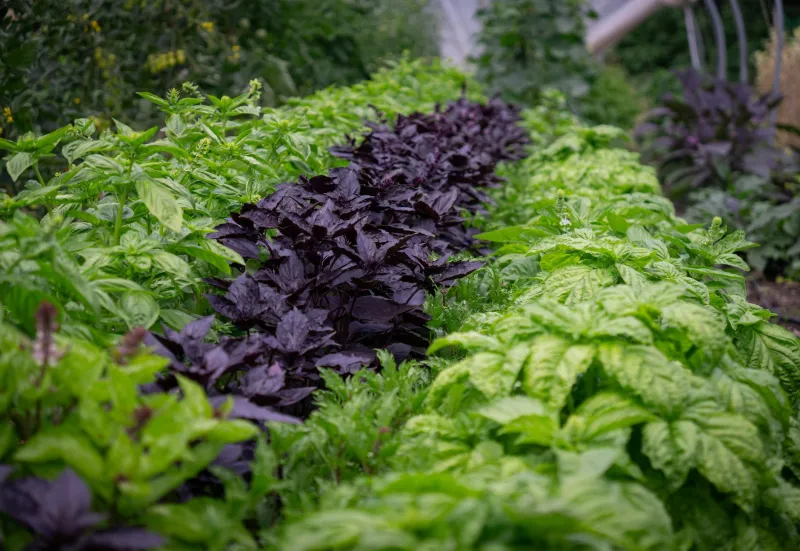
Kemangi (Ocimum americanum, sometimes called hoary basil or lemon basil) looks a lot like the sweet Italian basil you find at every grocery store in America. But the flavor is a completely different conversation. Where Italian basil is sweet and slightly peppery, kemangi is citrusy, floral, and a little spicy — almost like someone crossed fresh basil with lemon zest and a hint of clove.
That complexity comes from its essential oil profile. Kemangi is particularly high in linalool and citral — two aromatic compounds that give it that bright, almost effervescent quality. Citral is the same compound responsible for the sharp, clean scent in lemongrass and lemon verbena. When you bruise kemangi leaves by tearing or lightly crushing them, those oils release and immediately start doing flavor work on everything around them.
This is the basic chemistry behind why it can replace a dressing: the volatile compounds in the leaf interact with the surface of other vegetables, coating them with aromatic intensity the same way an emulsified dressing coats a salad. The difference is you're getting pure, fresh flavor instead of a stabilizer-laden liquid that was bottled six months ago.
The Simplest Recipe That Changed Everything
Here's the first thing I made, adapted loosely from what I'd seen in Indonesian home cooking videos:
Kemangi Cucumber Salad
- 1 large English cucumber, thinly sliced
- 1 cup fresh kemangi leaves, roughly torn
- 1 shallot, very thinly sliced
- 1 small bird's eye chili, minced (optional but encouraged)
- Juice of half a lime
- A pinch of salt and a pinch of sugar
Combine everything in a bowl. Let it sit for five minutes before eating. That's the whole recipe.
What happens during those five minutes is where the magic is. The salt draws a little moisture out of the cucumber. The lime juice interacts with the citral in the kemangi. The shallot softens slightly and releases its own sulfur compounds, which add a savory, almost umami-adjacent depth. By the time you eat it, you've got a fully dressed salad without a single bottled ingredient involved.
Why Indonesian Cooks Never Needed the Bottle
In Indonesian cooking, fresh herbs aren't a garnish — they're a structural ingredient. Kemangi shows up in lalapan, the traditional raw vegetable platter served alongside grilled meats and sambal, where it functions almost like a palate cleanser and flavor amplifier at the same time. It appears in pepes, the banana-leaf parcels where fish or tofu are steamed with aromatics. It's in soto, the brothed soups that vary by region but almost always include some version of fresh herbs at the table.
The pattern is consistent: Indonesian home cooks build flavor from the leaf up, using the plant's own chemistry to do the heavy lifting. There's no equivalent of the American dressing aisle in this tradition because the herbs themselves are doing that job.
Once I understood that framing, I started looking at my kemangi plant (I eventually grew one — more on that in a minute) the way Indonesian cooks do: not as something I add to a finished dish, but as something I build the dish around.
Three More Ways to Use Kemangi Instead of a Dressing
1. Tossed with warm rice Tear a generous handful of kemangi into freshly cooked jasmine rice. The heat blooms the oils without cooking the leaf. Add a squeeze of lime and a drizzle of good olive oil if you want something more substantial. This is a side dish that makes people ask what you did.
2. Blended into a simple green sauce Blend kemangi with shallot, a clove of garlic, lime juice, a small green chili, and just enough water to get things moving. You'll get something that functions like a vinaigrette but tastes like nothing you've poured out of a bottle. Use it on grilled fish, roasted vegetables, or plain tofu.
3. Muddled into a marinade Crush kemangi leaves into a paste with salt and use it as the base of a marinade for chicken thighs or shrimp. The linalool in the leaf acts as a mild tenderizer while the citral flavors the meat from the outside in. Grill or pan-sear as usual.
Getting Kemangi in the US
This is the part where I'd tell you to hit up your local Asian grocery store, and honestly, that's still the fastest route — many Southeast Asian markets carry fresh kemangi, sometimes labeled as lemon basil or Thai lemon basil. Indonesian and Thai grocery stores are your best bet.
But the better long-term move is to grow it yourself. Kemangi is a warm-season annual that does well in most of the continental US during summer months. It grows fast, tolerates containers happily, and a single plant will give you more leaves than you can use in a week. Seeds are available from specialty herb suppliers online, and a few Indonesian gardening communities stateside have been known to share cuttings.
Once you have it growing in your kitchen or on your porch, the whole dynamic shifts. You stop thinking about dressing as something you buy and start thinking about flavor as something you grow.
The Real Lesson Here
I'm not trying to sell you on ditching every condiment in your fridge. Some of them are genuinely good. But the kemangi experiment taught me something that's changed how I cook across the board: when a single fresh ingredient has this much natural flavor complexity, the job of a dressing — adding brightness, depth, and coating power — is already halfway done before you even get to the bowl.
Indonesian cooks figured this out a long time ago. I'm just catching up.